

It’s the 22nd as I write this. I forgot to write the entry for Invisibles yesterday, which is a shame because I had a couple of things I wanted to document. Hopefully I’ll remember everything as I write this.
The most important thing, I suppose, is what inspired it. The main sound is a handpan, specifically a Hang, but a sampled one from Omnisphere. I thought they were classified as metallophones, but when I looked it up, they’re technically an idiophone, something that makes noise by the vibration of the instrument itself. The Hang was the first of the handpans and is based on steel drums, which you certainly know. The primary difference is that a handpan is typically played with your hands instead of a stick or mallet.
- Invisibles Ray Toler 3:10
My most vivid handpan memory is actually from Bruges, Belgium. Mary and I were on a cruise with our friends and were wandering around the town when we came across a busker with a couple of handpans, a didgeridoo, bells around his ankles, and an open instrument case full of small bills and change. When you see someone who can actually play one of these things well, it’s hypnotic and mesmerizing. As an aside, the busker’s name is Curt Ceunen and we bought one of his CDs. I looked it up on Apple Music and he’s there, but with only one album. If you like Invisibles, you’ll almost certainly like his whole album. I’ve always found it relaxing.
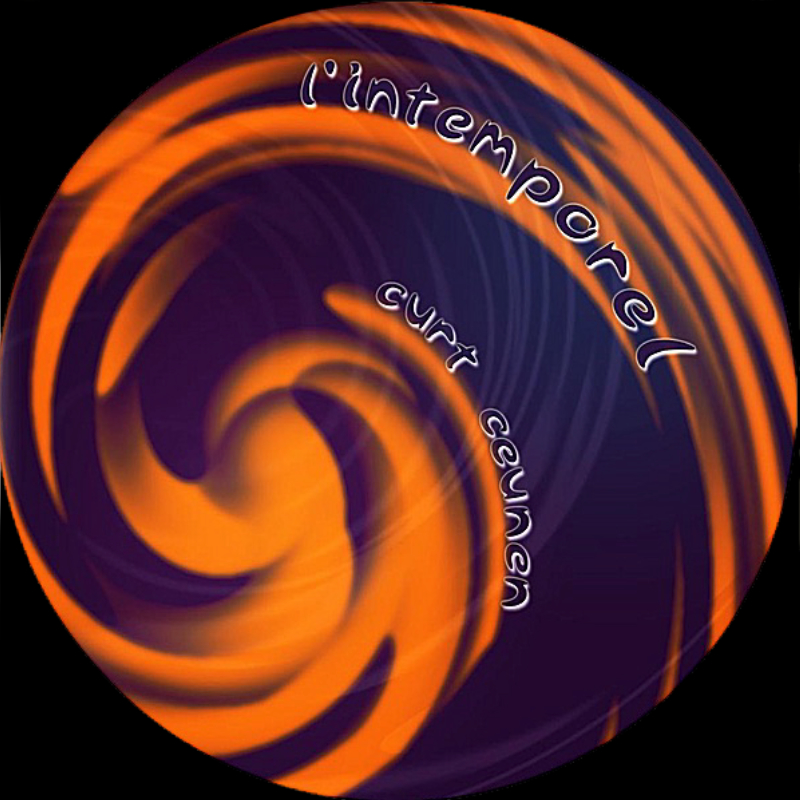
So… Curt actually isn’t what inspired this track. It was a little girl on Facebook who showed up as a random reel while I was doomscrolling looking for ideas. Or procrastinating. One of those. Because Facebook sucks and it’s nearly impossible to find something again, I can’t tell you her name, but she was phenomenal. I’d guess she’s somewhere around 8-12 years old, and is as natural a talent as you could hope to hear. Even better, she clearly enjoys what she’s doing. Ok. Inspiration achieved. Let’s get some hands… panning.
I’ve done one other track using a similar sound, Osaka Cascade from 2017, but when I listened to it just now, it’s got almost no relation. I swear I’ve done something else that sounds like this one, but I can’t find it, so maybe it came to me in a dream. Ah! The other track I was thinking of is Diaphanous Dervish from 2018, and it doesn’t use this sound at all. But it does use a technique that I was going to discuss with regard to Invisibles: step-entry of sequence data.
Step Off!
I do 99% of my sequencing by playing live and recording the subsequent MIDI data. I certainly will go in and correct wrong notes and timing errors. If I didn’t have to do that, my name would be Daniel Berkman. But I do play most everything. Every now and then, though, there’s a chord sequence or ostinato that is either beyond me to play, or I’m using the step sequencer as a creative tool. All a step sequencer does is advance by a certain amount each time you play a note. If I set it to 8th notes, it will make every note I play an 8th note.
When I first started thinking about what I was going to do with Invisibles, I flirted between step sequencing the whole thing or practicing my butt off for a few hours to be able to play it. And I sort of ended up using a different “cheat” that I’ve already used once this month: multi-tracking a single part.1See Mary Anne from February 14.
One thing that makes programmed parts sound more realistic is if you take the time to work out the limitations of a human playing an instrument. A drummer only has, at most, two hands and two feet. I mean, I sure hope that’s the maximum number. Some of them seem to have more, but at any given time, you’re unlikely to hear more than four things sounding at once from a typical drum kit. Unless they’ve put a tambourine on their high hat or something like that.
A handpan can, similarly, only play two notes at a time, and I wanted to try and adhere to that limitation. I practiced for about an hour, working out the melody and basic patterns, but couldn’t ever get it to sound smooth. I’m not all that coordinated, and trying to play this on a weighted keyboard only made it worse. You normally use a very light touch with a well-made handpan.
So! Multitracking to the rescue! I recorded the melody, then I recorded the bass notes, then I recorded the fill patterns, then I recorded small rhythmic thumps to mimic what good players do to keep the rhythm going by knocking on an untuned part of the instrument with the side of a thumb knuckle. Getting that to sound right was actually way more difficult than it sounds, and I’m still not happy with it, but the issues disappeared in the mix and I doubt most people would notice. In any case, it’s in tune with the rest of the piece.
I went through and made sure that there were never more than two things sounding at once, and that I’d be able to actually play this. Theoretically anyway. I did an A and B section, then expanded it out, created a C alternate of the A section, and worked out the ritard at the end. Nice.
Nice.
Yeah. I just can’t leave things alone. Ok. Fine. Let’s add some stuff. I decided that it needed some additional rhythmic elements and pulled up a seldom-used but favorite sample library called Rhythmus. I’ve used it before and it’s one of those things that you don’t need often, but when you do it is absolutely perfect. It’s a collection of snaps, pops, clicks, silverware, dings, dongs, just a bunch of miscellaneous things, all arranged in a way to make creating complex rhythms really intuitive and easy. It’s great for adding subtle motion or energy to a film cue.
Ok, cool. Four parts recorded and panned. Now what. Melodic. Something. Cor Anglais! This is my favorite wind instrument. It’s a mellower version of an oboe and is just soooo beautiful. I know I overuse it, but I can’t get enough of it. I improvised the entire part, cleaned up a couple of missed notes, and… ok. Are we done? Yyyyyyyyyeeeeeeeeeno. No. I was searching for something completely different (that I don’t remember) when I came across the sort of tonal noise sound that shows up a couple of times. Funnily, it came from a guitar sample library.
Ok. Done? Ye… Oh! Wait! I’d been talking about the bells that Curt had on his ankles, then remembered that I’d purchased a couple of jingle bell things at Walmart during the Christmas season. Let’s throw those on there!
Ok. Done now? Yeah, done enough, anyway. I could add little bits to this piece for two days and still want to do more, but I think it sounds pretty nice where I stopped.
Colophon
Instruments & Samples
Omnisphere, Rhythmus, Guitar Odyssey, Jingle Bells
Effects, Mixing, & Mastering
FabFilter, Valhalla, Gullfoss, Seventh Heaven
Notes
- 1See Mary Anne from February 14.